Ask for a clear compliance answer
Start with the requirement named in the subcontract and the response it calls for. The example below is an illustrative request, not a legal form or a Deep Fathom product screen. Use the actual terms and dates for your work.
Before we award this subcontract
- Requirement: Confirm whether you meet the cybersecurity requirements named in this subcontract.
- Required response: Provide the assessment, affirmation, or declaration information required by those terms. Include the supporting record or reference you are permitted to share.
- Current status: Give the relevant dates and confirm that the response covers this work.
- Anything outstanding: Identify a requirement you do not yet meet or a question that prevents you from giving a clear answer.
- Reply: Respond by the agreed date through the designated channel. Contact the named buyer if a requirement needs clarification.
Follow the answer to the next action
The supplier replies
We meet the requirements named in the subcontract. The required assessment information is current and covers this work. We have no outstanding exceptions to report.
This is a fictional response. Your team still checks the required information and records whether it supports the award decision.
Your reviewer follows up
When the required information is complete, current, and applicable, record the conclusion and the next update date or trigger. Keep routine follow-up focused on changes that could affect compliance.
Other responses call for different actions:
- No response or an outdated record: Request the missing or updated information and set a reply date.
- Unclear answer: Ask the supplier to resolve the specific question. Request supporting detail if needed.
- Known compliance gap: Identify how it affects the award or work, who will address it, and when. Offer implementation support where useful.
A deeper request may be warranted if records conflict, the work changes, or the terms require additional evidence. Explain the question that the detail needs to resolve.
Keep the requirement and the review connected
Deep Fathom’s Flowdown records connect a supplier’s obligation with its acknowledgment, recorded status, review notes, and linked evidence. That gives your team a basis for tracking responses and following up on exceptions. Your team decides whether the response meets its requirements.
Suppliers can use Deep Fathom to assess gaps, assign remediation tasks, and organize supporting evidence. They can do the compliance work behind their response and maintain it as their business changes.
A prime can recommend that platform, coordinate a rollout, or help fund access for important suppliers. The program connects visibility into gaps with a practical way to address them. Agree what suppliers will share and who can access it.
Bring one supplier group and the compliance answers your team needs. We’ll discuss how Deep Fathom can support the program and help suppliers meet its requirements. Explore the supplier program.
In Deep Fathom
Follow up on an outstanding supplier response.
This demo Flowdown record is marked Unverified. It keeps the supplier obligation and recorded status together so your team can track the follow-up.
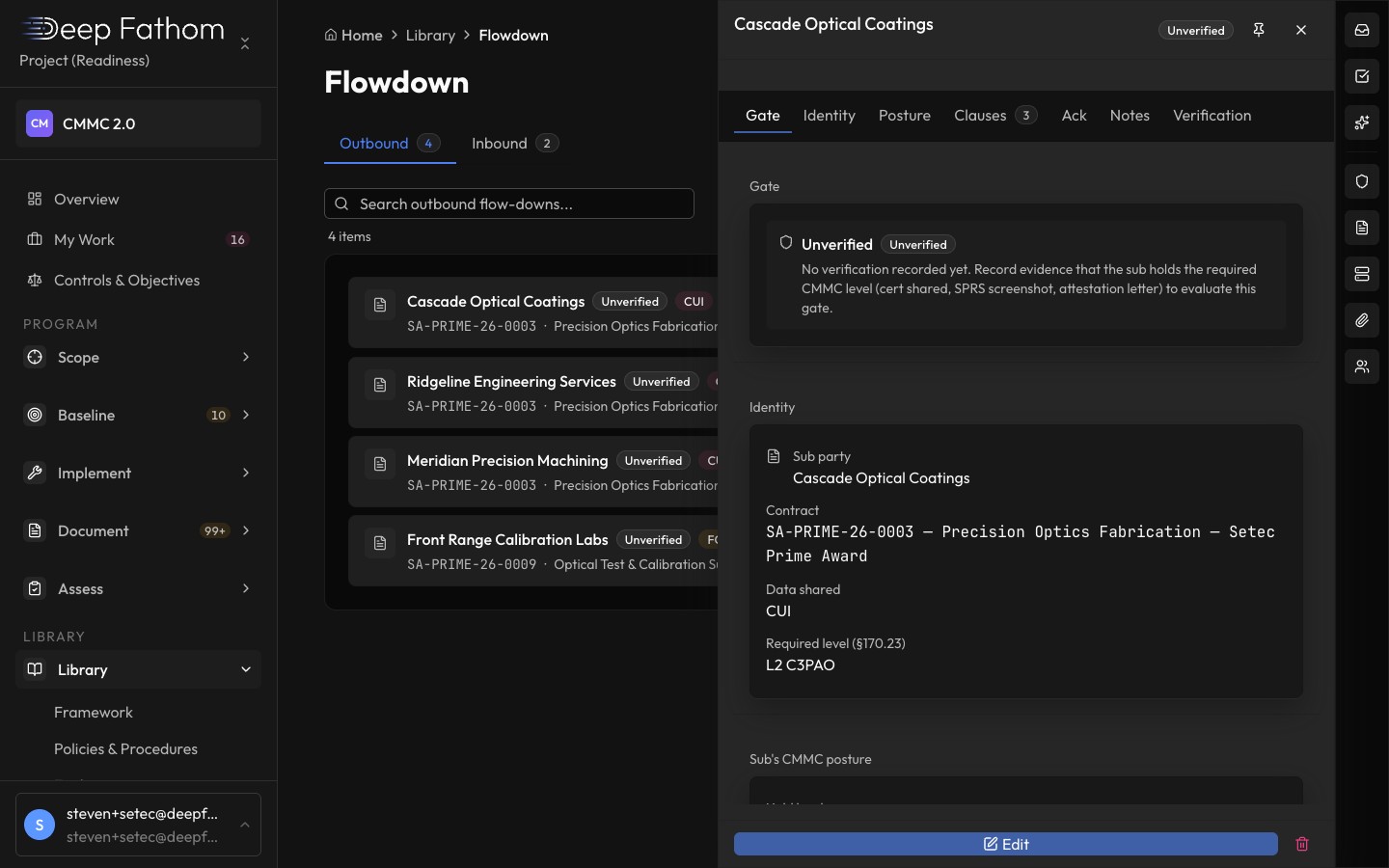 Expand product view
 Check the terms that govern the request
Requirements depend on the work and information involved. DFARS 252.204-7012(m) ties its flow-down to operationally critical support or performance involving covered defense information. Read the clause. Resolve what applies before asking the supplier to claim it meets a requirement.
Your internal review does not create a formal assessment status. Where CMMC applies, check the governing contract and current implementation direction for the required route. DFARS 252.204-7021 distinguishes self-assessment and authorized third-party or government assessment statuses.
See the supplier’s evidence-reuse check or return to the hub.